Retrofit insulation in Lafayette IN - fewer drafts in the house you already have
Drafty rooms, cold floors and a power bill that climbs every winter. We seal the gaps first, then add insulation where your house needs it.
Where should I add insulation first in an older house?
Retrofit insulation means adding insulation to the attic, walls, floors or crawl space of a house that's already standing. For most older homes in Lafayette, IN, the attic comes first, because many have little or nothing up there and it's the easiest place to add more.
Most people call us because the upstairs is hot in summer, the floors are cold in winter or the whole house just feels drafty. The price turns on how many inches are already in the attic, how many gaps need sealing, whether old material needs insulation removal first and whether you want the walls done too. The schedule turns on what we find, because a roof leak, old wiring or vermiculite gets dealt with before any new insulation goes in, and on whether your address needs a permit. I write all of that out at the estimate, so you see your own number and the order the work happens in.
How we do retrofit insulation, step by step
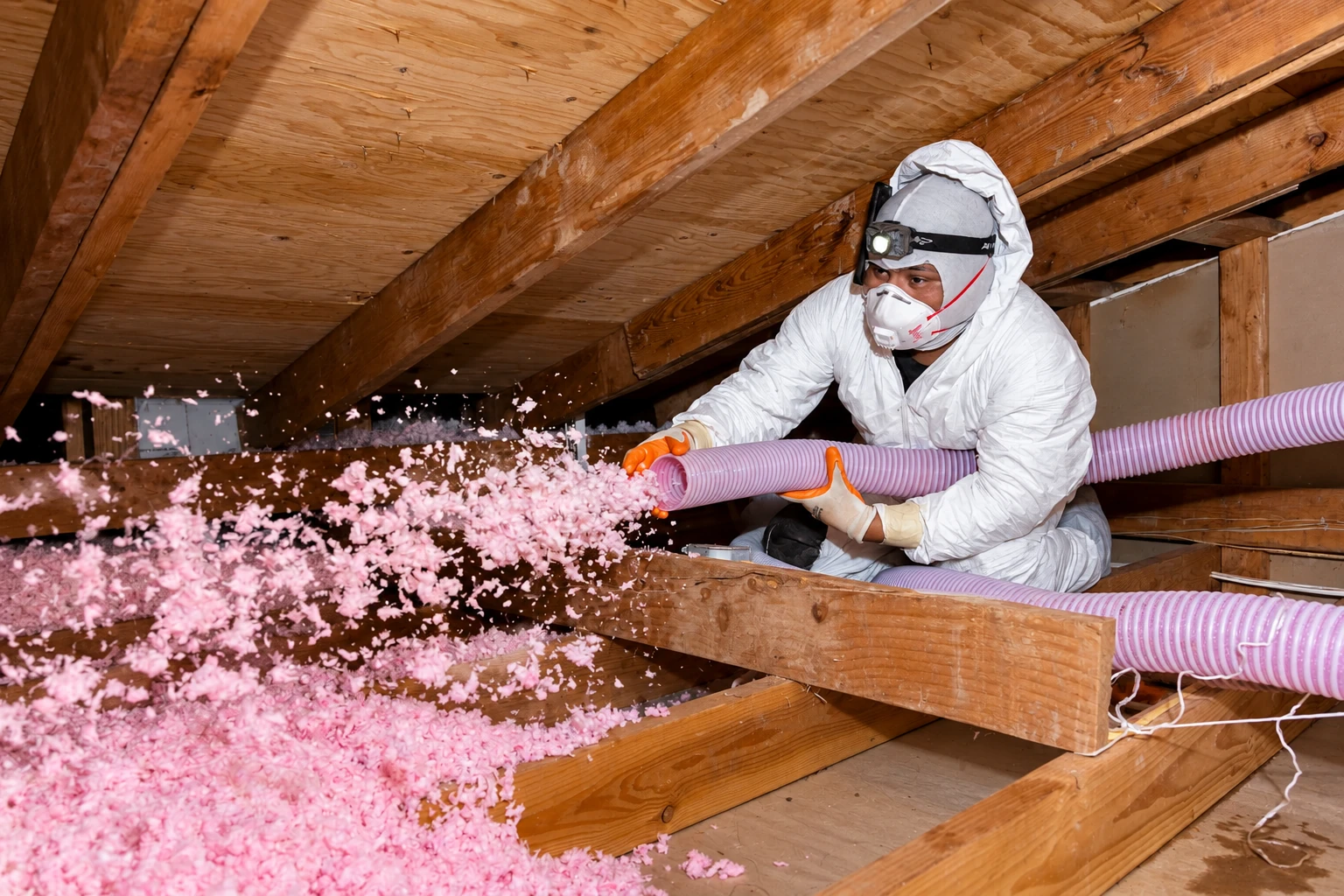
On an older house I usually start in the attic. We check what's already up there, and if the old insulation is soaked or full of droppings, it comes out, because new material over a problem just hides it. Then we do the air sealing, which means closing the gaps around light fixtures, pipes, wires and the hatch so the new insulation isn't fighting a draft. We set baffles, simple chutes that keep insulation out of the eave vents, so the attic keeps breathing, and blow in fill to an even depth with the edges as full as the middle. After the attic I look at the walls. Before any fill goes in we check for knob and tube wiring, the old wiring strung on porcelain knobs, since the electrical code doesn't allow insulation on or around it. We also ask about old paint before we drill, because in a house built before 1980 lead safety rules can apply depending on how much of the wall surface the work disturbs.
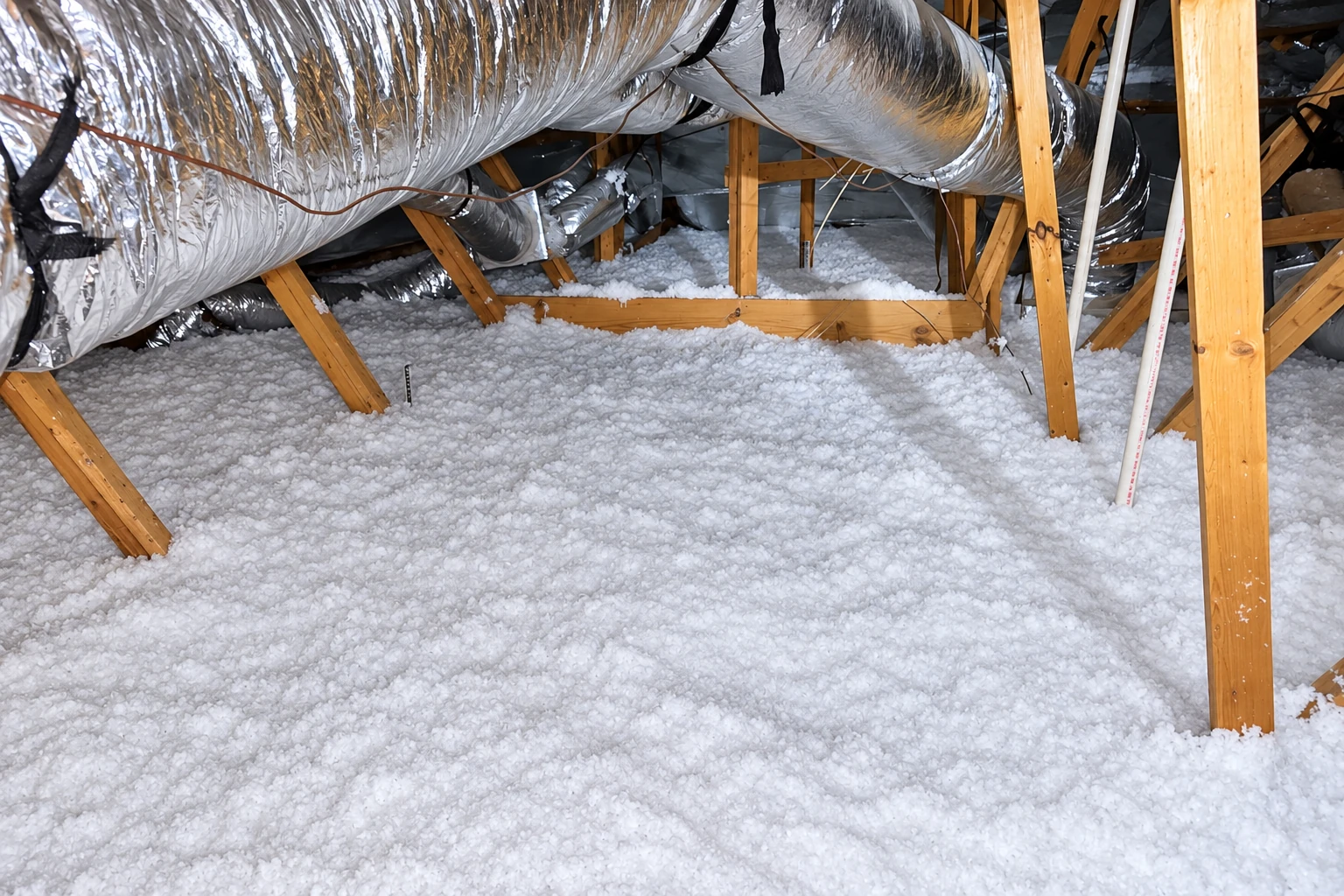
Most retrofits start as attic insulation, sealing first and then blown-in fill, which is loose fill blown through a hose. Spray foam insulation costs more but seals air while it insulates, so I'd steer you to it where the ductwork runs through the attic or the room over the garage stays cold. For an ordinary attic floor, sealing the gaps and topping up loose fill usually does the job for less.
Attic sealing and a blown-in top-up
This suits most older houses where the attic has a few inches of settled fill or bare spots between the joists. If what's up there is dry and clean, new fill goes right over it once the gaps are sealed.
Drill and fill for the walls
This suits houses where the attic is done but the outside walls still feel cold, which usually means empty cavities. We blow fill through small holes in each cavity and patch them, after the wiring and paint checks.
Retrofit insulation permits and older houses in Lafayette
If your house is inside Lafayette city limits, the City Engineer's Office issues building permits, and the city's rule is that a permit is required for any alterations, repairs or changes to existing buildings. Before we schedule, I look up which office covers your address, since homes outside the limits usually go through a different office, and the city's zoning and GIS maps show which side of the line you're on. If your job needs a permit, we handle the paperwork and tell you what the office needs from you. We plan around the city's review, which can take up to seven days once every document is in.
Around here we see a lot of older houses with a few inches of settled fill in the attic, eave vents buried under it and outside walls with nothing in them. We find the same houses on jobs in West Lafayette and Frankfort, so the attic-then-walls order holds there too.
What retrofit work looks like
Why call us for retrofit insulation
I write your estimate myself
I come out to look at the job and write the estimate, then our install crew does the work and I check it over with you at the end. That way the person who planned the job is the one who walks it with you when it's finished.
Commercial years before 2017
I spent years spraying foam and blowing fill on warehouses, offices and new buildings before starting this business in 2017. That's where we learned to get the prep right, finding what needs fixing and sealing leaks before any insulation goes in.
Licensed, insured and Lafayette based
We're licensed and insured, and we work out of Lafayette across the cities around it. I still answer the phone myself, so you're talking to the person who'll walk through your house.
If your house is drafty or the attic looks thin, get in touch and tell me how old the house is, which areas you want insulated and whether you've seen vermiculite or knob and tube wiring.
(765) 250-8263Get a written plan for your attic and walls
I reply to every form within one business day and set up a time to come out. The estimate is free, done on site and comes with no obligation, and I'll walk through the space with you and write out what I'd do and why.
Retrofit insulation questions from Lafayette homeowners
How much does it cost to add attic insulation to a house in Indiana?
Upgrading a typical 1,500 square foot attic with blown cellulose in Indiana usually runs about $2,000 to $6,000. Where your attic lands depends on how many inches are already there, how much sealing it needs and whether old material comes out first. That's the going range, not our quote, so I'll write out your own number at the estimate.
What is the best way to insulate existing walls in an older house?
Drill and fill is the common way, blowing insulation through small holes near the top of each wall cavity, and it's fairly low disruption. Working from inside leaves the house wrap and other water layers behind the siding untouched, while drilling from outside cuts through them and they need patching. If you're re-siding anyway, that's the time to work from outside and add rigid foam.
Do I need to air seal my attic before adding more insulation?
Yes, the openings in the attic floor should be sealed first. It saves energy, helps prevent moisture problems in the attic and draws fewer soil gases like radon into the house. Once new insulation is down, those gaps are buried and much harder to reach.
How do I handle vermiculite insulation in my attic or walls?
Leave it alone and don't try to remove it yourself. The EPA advises keeping vermiculite undisturbed and hiring a professional asbestos contractor for any work that would disturb it. If we spot it, that contractor goes first and we plan our work around theirs.
Is there free insulation help for homeowners in Lafayette, Indiana?
If your income qualifies, Indiana's Weatherization Assistance Program provides free weatherization for both renters and owners. Depending on the home, that can include attic and wall insulation and sealing drafty areas. It's worth checking the state's weatherization program before you book, since it may cover the same work.
What causes the upstairs to be so hot in an older Lafayette house?
Usually it's a thin or uneven attic sitting over open gaps in the ceiling, so summer heat comes straight down and cooled air leaks up and out. Buried eave vents make it worse because the attic can't shed hot air. That's why we look at the attic before anything else.
Talk to us about your attic, walls and air sealing
We pick up seven days a week, so call (765) 250-8263 or send the form whenever you get a minute.