Home insulation in Lafayette IN - air sealed first, insulated where it counts
Drafty rooms, cold floors and a hot upstairs usually mean air leaks and thin spots. We seal first, then insulate, so the house feels even.
Where do I start insulating a drafty older house?
Home insulation in Lafayette means sealing the air leaks and then adding insulation where your house loses heat. That's usually the attic first, then the floors, the crawl space and the rim joists where the frame sits on the foundation. Done in that order, it usually evens out drafty rooms and cold floors and takes some of the load off the power bill.
Most calls I get start with a room that won't stay warm, floors that are cold underfoot, or an older house where nobody knows what's up in the attic. The price moves with how much of the house needs work, how many inches are already up there and what shape they're in, whether old material has to come out first, and which type each area calls for. The schedule turns on what I find, because a roof leak or old wiring gets fixed before anything goes in, and on whether your address needs a permit. When I come out, I walk through the space with you and write out what I'd do and why, so you can see where your money goes before you decide.
How we do home insulation, start to finish
For a whole house, I start in the attic and with the air leaks, because that's usually where the most heat gets away. Before any insulation goes in, I look for anything that has to be fixed first, and if it's a roof leak or another trade's job, I'll tell you so rather than bury it. Then our crew does the air sealing, closing the gaps around pipes, wires, can lights and the hatch before insulating, so the new material isn't fighting a draft. We keep the eave vents clear so the attic can still breathe, and we lay the insulation full depth out to the edges, where attics are usually thinnest. Only then do we move down to the floors, the crawl space and the rim joists, and we pick the type for each area instead of using one product everywhere.
The connected work usually shows up on the walk-through. If the insulation up there now is soaked or full of droppings, insulation removal comes first, because new material laid over it just keeps the problem in your house. Under the floor, crawl space insulation is often what fixes cold floors, and I'll tell you when that does more for you than another layer in the attic.
Loose fill over sealed gaps
This suits most attics that already have some insulation, because blown-in fill, loose material blown through a hose, settles around framing and into corners without tearing anything up. Paired with sealing first, it's usually the best value, and it's what I suggest for most attics.
Batts for open framing
Batts, the pre-cut pieces of blanket insulation, are the most common kind in American homes and work well between open joists and studs where you can reach every bay. They have to be fitted snug around wires and pipes, since gaps cut into what they do.
Spray foam where air and moisture are the trouble
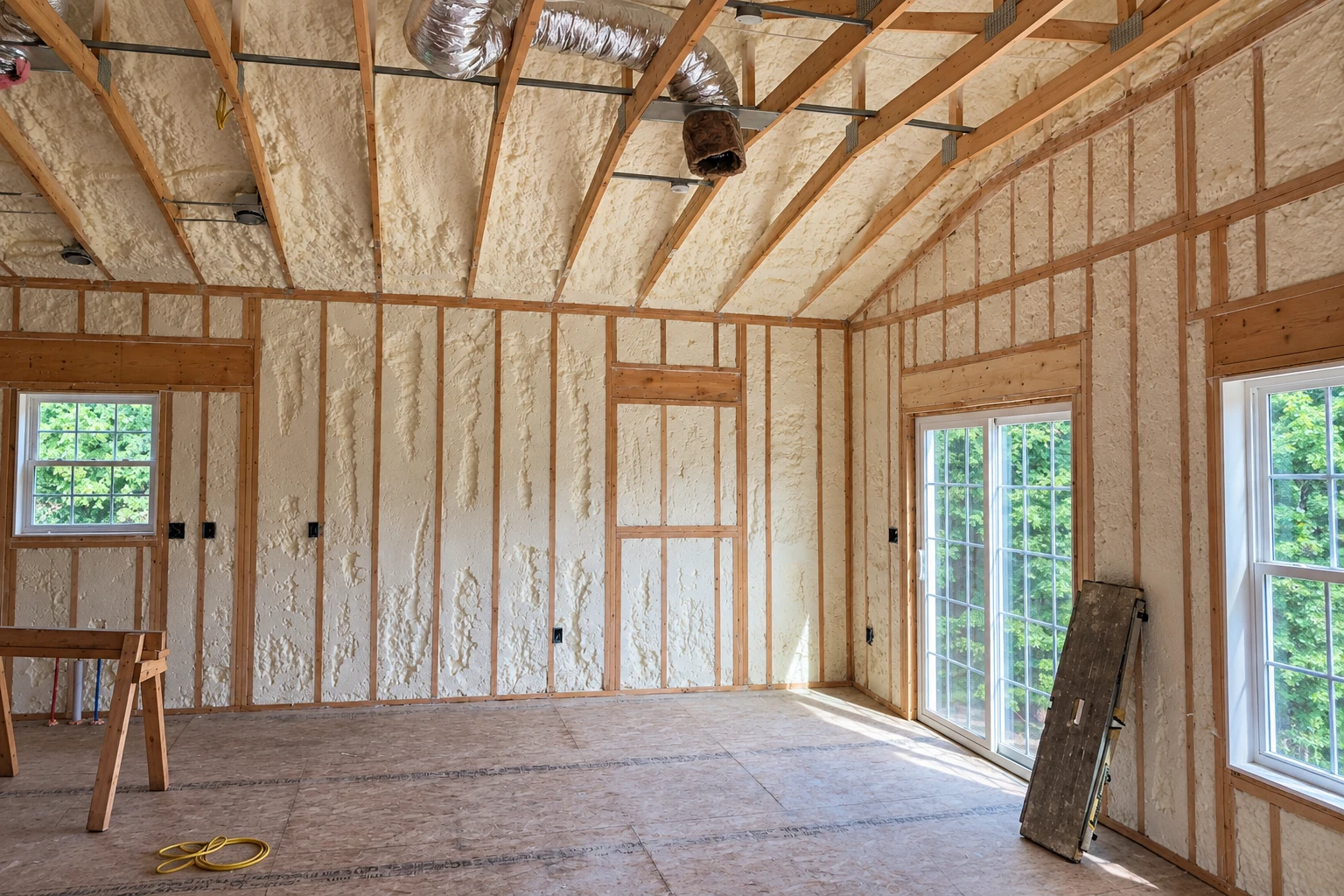
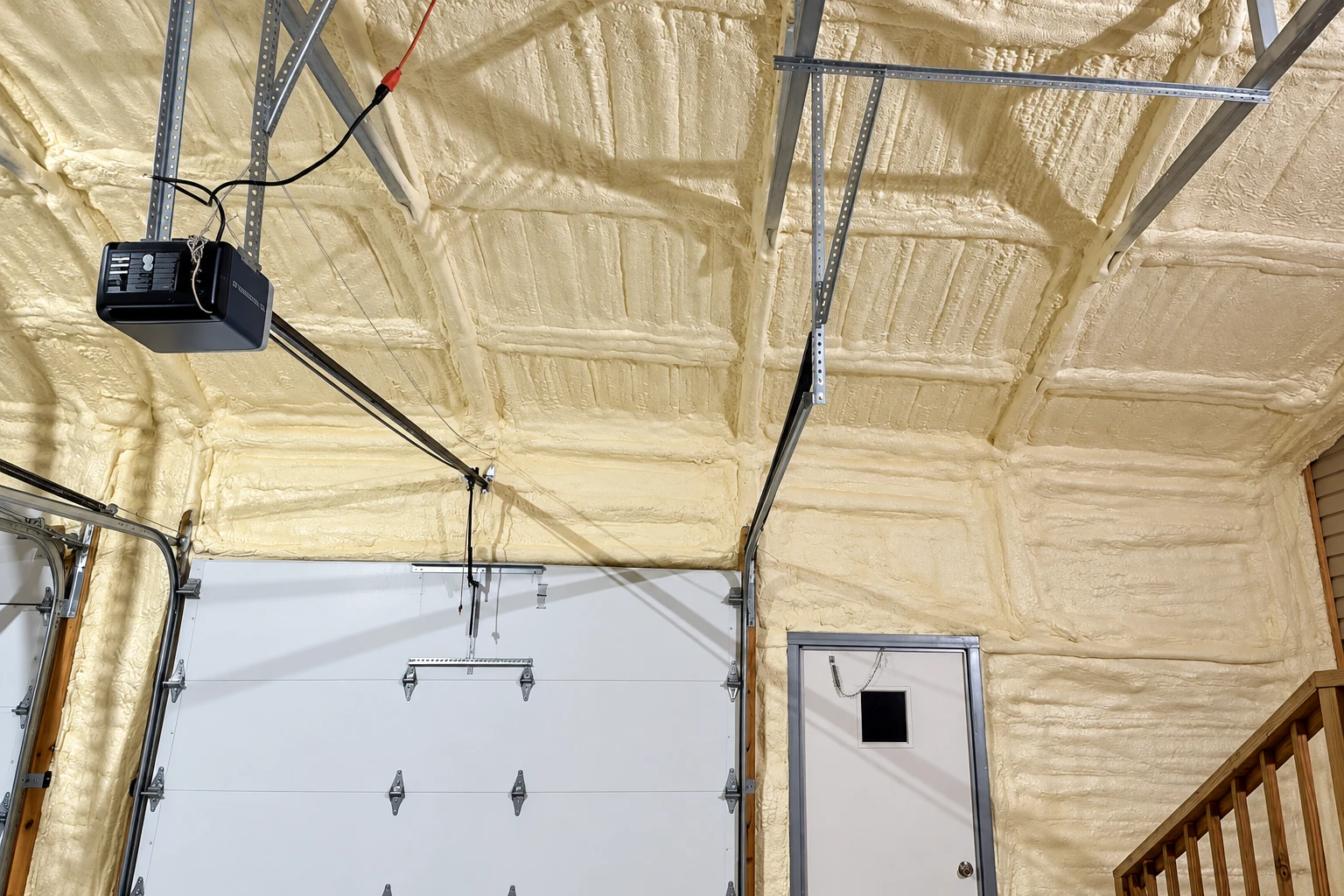
Foam costs more, but it seals air while it insulates, and closed-cell foam, a dense foam that blocks moisture, suits rim joists and crawl space walls. In an attic I only push foam when the ductwork runs up there, since otherwise sealing and loose fill do the job for less.
Home insulation permits and houses in Lafayette
Inside the Lafayette city limits, building permits come from the City Engineer's Office, and the city requires one for any alterations, repairs or changes to an existing building. A house just outside the city line can fall under the county or another office, so before we schedule, I look up which office covers your address and what it wants for your job. On work that needs a permit, the city may also require a general contractor to post a $5,000 bond.
Much of what I see here is an older house with a few inches of old fill in the attic, a hatch and pipe holes that were never sealed, and cold floors over a crawl space. We see the same mix on jobs in West Lafayette and Frankfort, and the order of the work stays the same.
Insulation work up close
Why call us for home insulation
I write the estimate myself
I come out to look at the job and write the estimate, our install crew does the work, and I check it over with you at the end. The person who made the plan is the one who makes sure it was followed.
Running this business since 2017
I started this business in 2017 after years spraying foam and blowing fill on warehouses, offices and new buildings, and I still answer the phone myself. You get someone who has been in a lot of attics and won't guess at yours.
Licensed and insured for this work
We're licensed and insured, and the job is backed by our satisfaction guarantee. That matters when a crew is working above your ceilings and around your wiring.
Permit paperwork handled for you
If your job needs a permit, we handle the paperwork and tell you what the office needs from you. Lafayette can take up to seven days to review a residential permit once every document is in, so we plan the schedule around that.
Getting the order right matters more than the product you pick, so the first step is a walk-through. Send us a note or call (765) 250-8263.
(765) 250-8263Get a written plan for insulating your house
I read every message, and we reply within one business day to set a time for me to come out. The estimate is free, done at your house and obligation-free, and you'll have what I'd do and why in writing.
Home insulation questions from Lafayette owners
How much does home insulation cost in Lafayette, Indiana?
Across the US, home insulation usually runs about $1 to $5 per square foot installed, so treat that as the market range and not our price. Where your house lands depends on which areas need work, the type each one gets and whether old material has to come out first. Your own number comes after I've seen the attic.
Is it safe to air seal a house that has a gas furnace or water heater?
It can be, once the appliances are tested. Sealing a house can sometimes make a naturally venting gas or oil appliance pull its exhaust back inside, which isn't safe, so homes with those appliances can have a home performance contractor test them before and after the sealing. Tell me about them when you call and we'll plan for it.
What attic problems need fixing before new insulation goes in?
Damp insulation from a leaky roof, rotted rafters and an attic with little ventilation should be fixed by a professional before insulating. Knob and tube wiring, found in houses wired before 1930, belongs on that list, because it can be a fire hazard when insulation touches it. I'll point out anything like that on the walk-through and tell you who to call.
What is the best way to handle vermiculite insulation in an attic?
Leave it alone. The EPA advises treating vermiculite as if it contains asbestos, a harmful mineral, and leaving it undisturbed. If removing it is part of the plan, that takes a trained professional before we start. If you think you have it, tell me before the walk-through.
Can new insulation go over the old insulation in my attic?
Usually, yes. Loose fill can go over batts and batts over loose fill, though batts laid over loose fill should be unfaced, with no paper or foil backing. Old material that's soaked or full of droppings comes out first. Insulation also stays off soffit vents and recessed can lights unless the lights are rated IC, for insulated ceiling.
How do I insulate my attic myself in Lafayette?
Seal the leaks first, then insulate, and only take it on if your attic is easy to get into and move around in, the case ENERGY STAR's do-it-yourself guide is written for. Some home stores rent the blowing machine for loose fill. If the job needs a Lafayette permit, the city lets homeowners do the work when they submit a copy of their homeowners insurance, live or plan to live there, and use a state licensed plumber for any plumbing.
Talk with us about sealing and insulating your house
Call (765) 250-8263 with your attic access, any gas or oil appliances and your can light rating so I arrive ready.