Commercial insulation in Lafayette IN - air leaks sealed, heat kept inside
Drafty offices, a shop floor that won't hold heat or a high power bill usually start with air leaks we can find and close.
Is more insulation worth it for my commercial building?
Commercial insulation in Lafayette is the work of sealing the air leaks in an existing office, store or metal building and then adding insulation to the walls and roof where it will actually help, so the building holds its heat and the power bill stops climbing.
Most building owners call us because one end of the building never warms up, the front of the store is drafty or the heating bill keeps rising when nothing else has changed. The price turns mostly on the size of the building, how it's framed, what's already in the walls and roof, how much air sealing it needs and which material suits it. The schedule turns on how much of the building has to stay open while we work and whether the job needs a permit. When I come out, I walk the building with you and write out what I'd do and why, so you see the plan for your building before anything gets decided.
How we handle commercial insulation
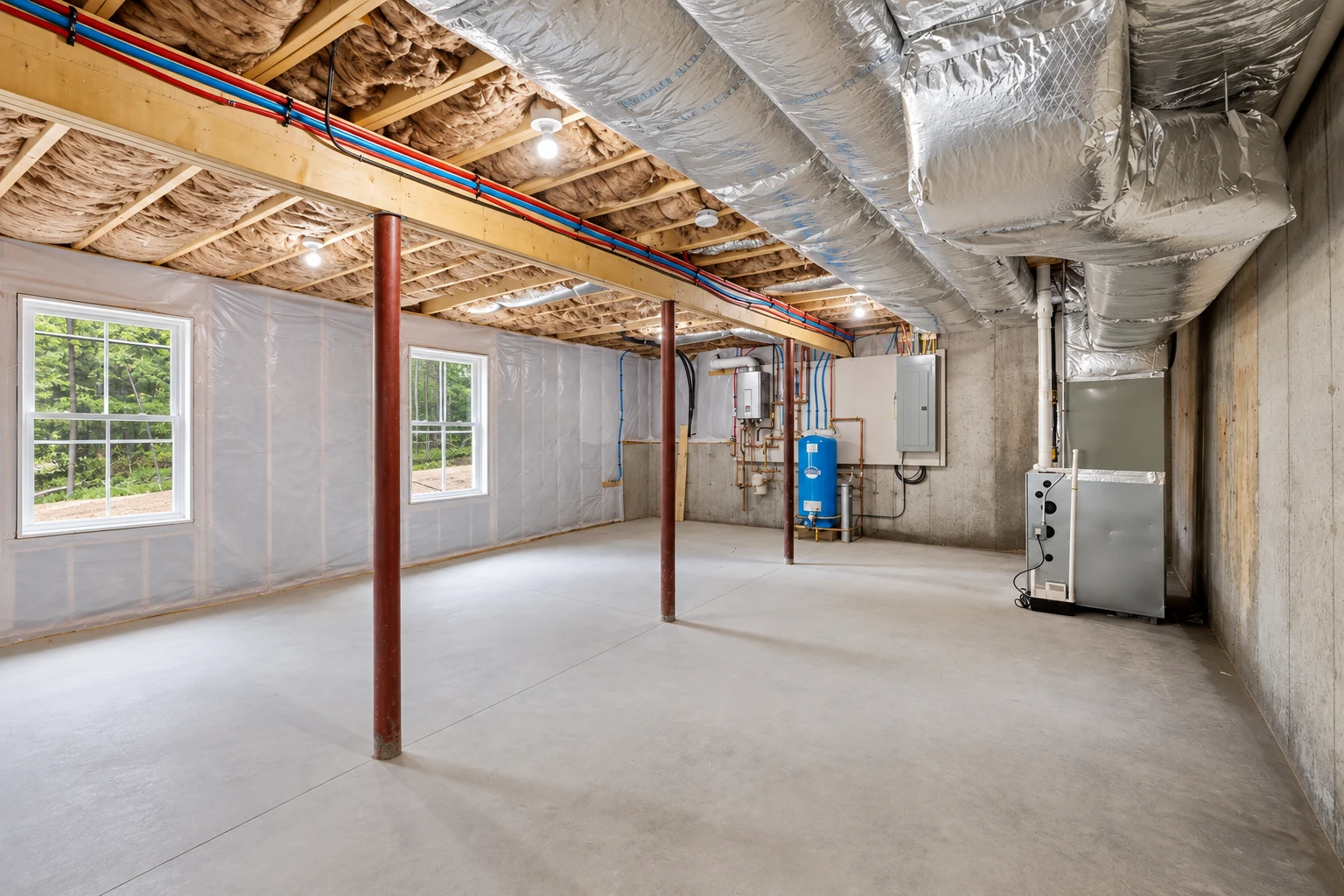
I start every commercial job by walking the building with you and looking at the roof deck, the wall cavities, the door and window frames and the line where the walls meet the roof. I check for water stains too, because insulation laid over a roof leak just hides it, and if something needs a roofer or another trade first, I'll tell you that before I sell you anything. Once the space is ready, our crew does the air sealing, closing the gaps and seams that let heated air escape, and then puts the insulation in full thickness with no gaps and nothing crushed, since insulation that's squashed or stops short of the edges loses much of what it's rated for. We clean up as we go, and when the crew is done, I go over the work with you.
Moisture is the other half of the job, because damp insulation stops working and can rot the framing behind it. In a heated building the vapor barrier, a layer that slows moisture, usually goes on the side that's warm in winter, and the right detail depends on the insulation and how the building was designed, so we settle it before anything goes in and handle the vapor barrier installation as part of the same job. Offices and shops built over a crawl space often need a crawl space vapor barrier as well, so ground moisture doesn't soak the floor framing under the new work.
Spray foam on walls and roof decks
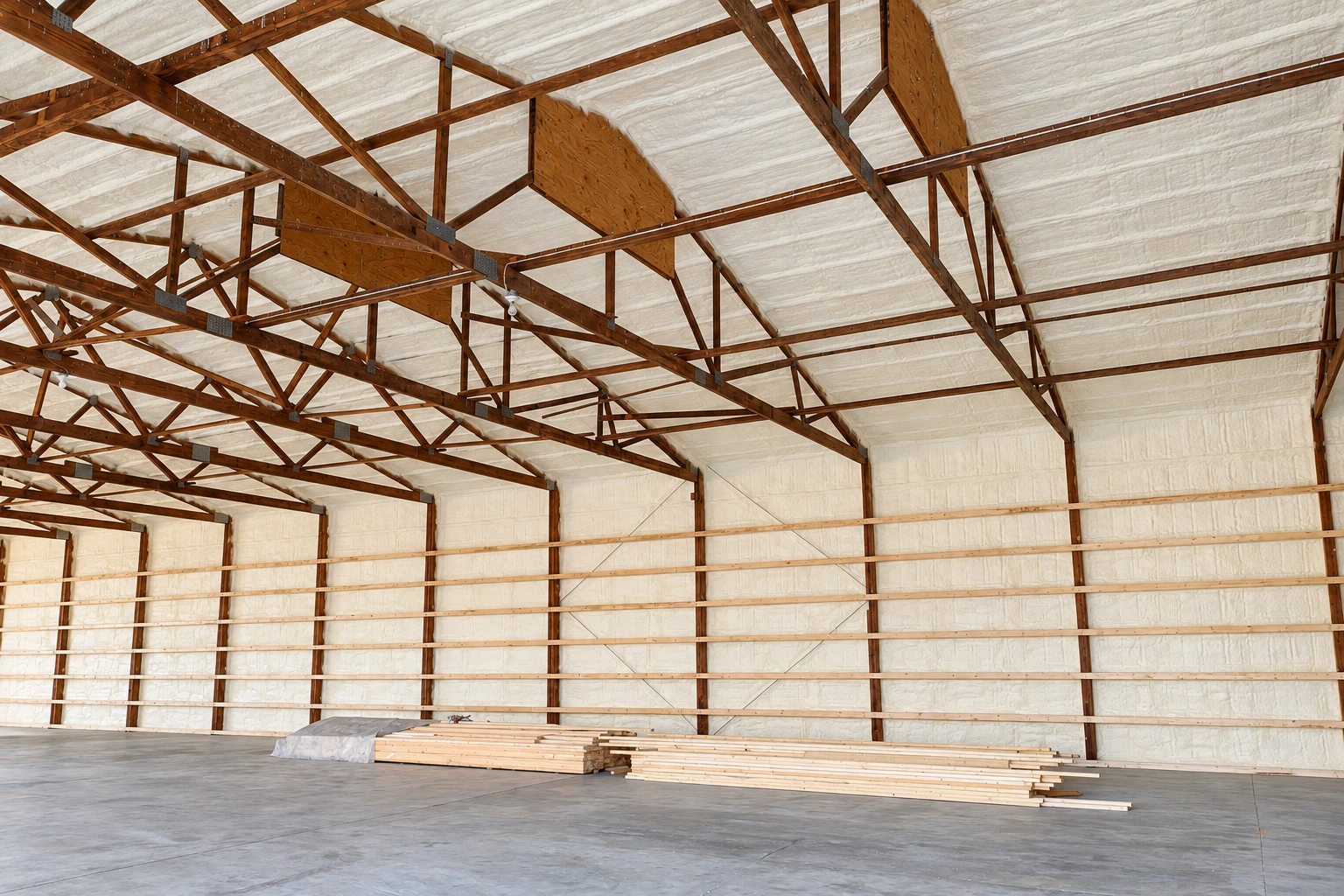
Closed-cell foam, a dense foam that blocks moisture, suits metal buildings and roof decks with no attic space, where condensation on cold steel is a worry. It seals air and insulates in one pass, which is what those buildings need.
Air sealing with blown-in fill
For offices and stores with an attic or space above the ceiling, sealing the gaps and then adding blown-in insulation, loose fill blown through a hose, usually gets most of the benefit. It's the option I point people to first, unless the ductwork runs up there, in which case foam usually wins.
Commercial insulation permits and buildings around Lafayette
Lafayette's City Engineer's Office issues permits for new construction and for alterations, repairs or changes to existing buildings, and its list names that work, not insulation, so whether your project needs a permit is the office's call. Before we schedule, I look up which office covers your address, since that can be the city, the county or another office, and if the job needs a permit, we handle the paperwork and tell you what the office needs from you. Some larger commercial projects also go through state plan review with the Indiana Department of Homeland Security, though some are exempt, and that's part of what I check before we set a date.
Around Lafayette we work on a lot of metal shops, older storefronts and offices built before anyone paid much attention to air leaks. We see the same kinds of buildings on jobs in West Lafayette and Frankfort, and we do the work the same way there.
Commercial insulation, up close
Why call us for commercial insulation
Years on commercial crews first
Before I started this business in 2017, I spent years spraying foam and blowing fill on warehouses, offices and new buildings for a big commercial outfit. That background helps whether your building is a metal shop, an office or a store.
The owner writes your estimate
I come out to look at the building and write the estimate myself, and our install crew does the work. When they're done, I check it over with you, so the person who planned the job is the one who looks at the result.
Licensed and insured for permits
We're licensed and insured, so we can go on the list of contractors the city's commercial permit packet asks for. Our work is backed by our satisfaction guarantee.
When you're ready, send us the details of your building or call (765) 250-8263, and I'll set a time to come walk through it with you.
(765) 250-8263Get a written plan for insulating your building
We reply within one business day, and the estimate is free, done at your building and comes with no obligation. I'll come out, walk through the space with you and write out what I'd do and why, so it helps to note your building type and any thermal images or drawings you already have.
Questions about insulating commercial buildings in Lafayette
Should we seal air leaks or add insulation first in a commercial building?
Seal the air leaks first, then look at how much insulation the walls and roof need. Retrofit guides for offices and stores put air sealing at the start of the plan and the budget, and they point to doors and windows as the usual leak spots. Even fairly new buildings can leak from construction defects, and you can ask for an infrared scan, heat-sensing photos, to find leaks before work starts.
Will adding insulation pay off for our commercial building in Lafayette?
Not always. Adding insulation to an existing building can be expensive, and it may not pay off where what's there already meets an energy code. Retrofit guides suggest a careful analysis with building energy simulations, computer models of how the building uses energy, before you commit. If I think your money does more on sealing leaks than on new insulation, I'll tell you so.
Where should insulation go on a commercial building's walls and roof?
Insulation usually works best on the outside of the wall or roof, where it can form one continuous layer around the whole building. When you compare bids, it's fair to ask each contractor whether an outside layer suits your building. On the walk-through I'll tell you where I'd put it and why.
How much does commercial insulation cost for a building in Lafayette?
The cost comes down to the building's size and framing, how much air sealing it needs and which insulation goes in, and I put it in writing after I've walked through. Spray foam costs more than sealing the gaps and adding loose fill. Old insulation that's soaked or fouled has to come out first, so insulation removal adds to the job when it's needed.
How long does a commercial permit review take in Lafayette?
The city says commercial reviews may take up to ten business days, and that clock starts only once every required document and administrative requirement is in. The submittal includes the application, two sets of plans and a list of contractors, and as the property owner you sign an owner's authorization. When a permit is needed, we put the packet together and tell you what to sign, so it isn't sitting incomplete.
What is the best way to insulate a metal building in Lafayette?
Seal the leaks at doors, seams and the roof line, then fill the wall and roof cavities rather than relying on a thin facing. The National Insulation Association says filled cavity systems, which fill the space inside the framing, are quickly becoming a necessity to meet stricter energy codes. I'll look at what's in your building now and tell you whether filling it is worth it.
Get your building's air leaks and insulation looked at
Call (765) 250-8263 or use the form, and have any drawings or thermal images ready so the first walk-through covers more ground.