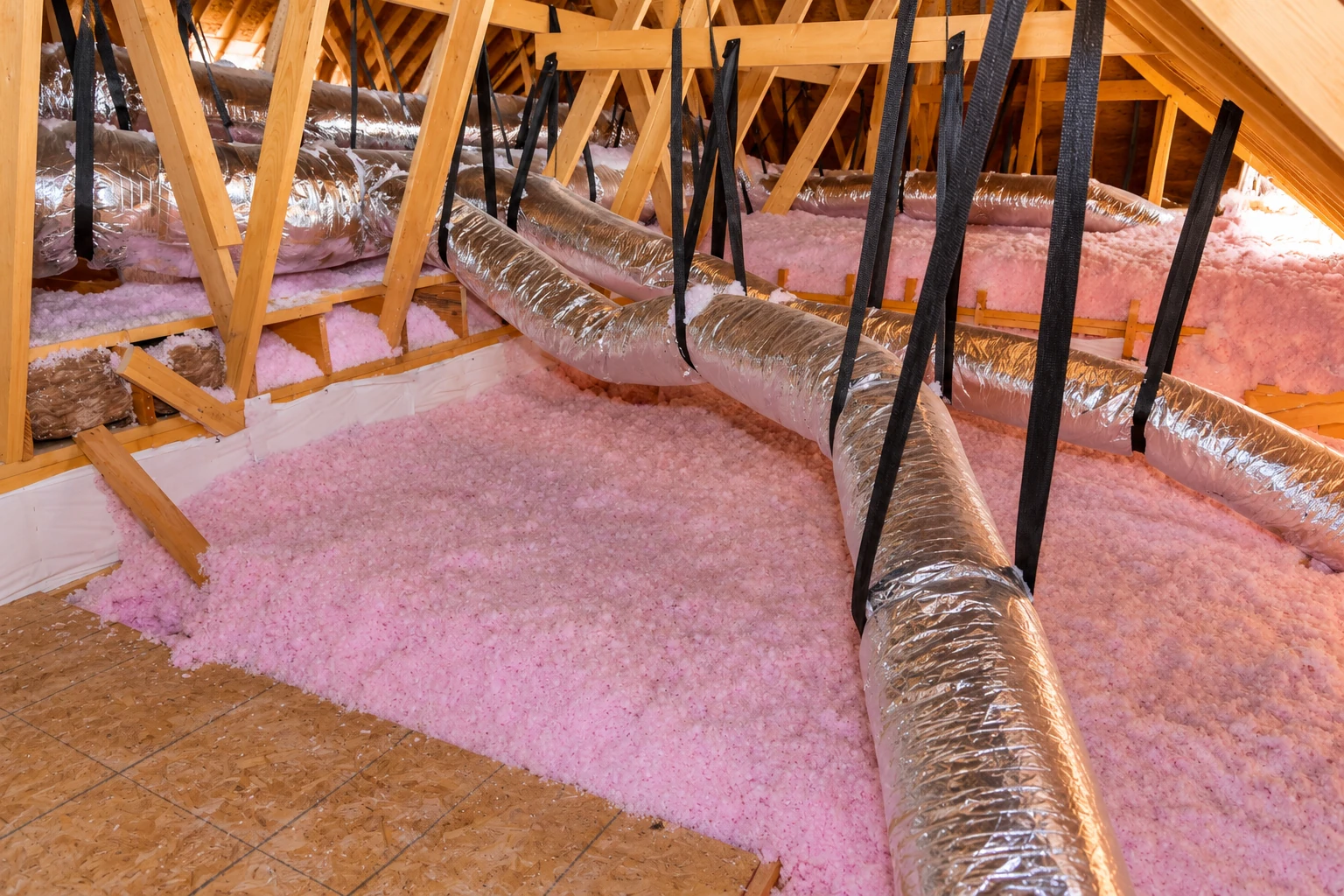
Blown-in insulation in Lafayette IN - an even layer over a sealed attic floor
Upstairs too hot or the power bill climbing? We seal the gaps in your attic floor, then blow in an even layer.
Does my attic need more blown-in insulation?
Blown-in insulation is loose fill that we blow through a hose across your attic floor, and for most Lafayette houses it's the most direct way to bring a thin attic up to current code levels once the gaps in the ceiling are sealed. A sealed, well-insulated attic keeps more heat in the rooms you live in, and it can also help keep ice dams from forming on your roof in winter.
If the upstairs bakes in July, the room over the garage won't warm up or the power bill keeps creeping, the attic is usually where I look first. The price moves with the size of the attic floor, how many inches are already up there, how much sealing it needs and whether old material has to come out first, and the schedule turns on that same prep plus whether your address needs a permit. Most jobs start with attic air sealing, closing the gaps in the ceiling below, and the estimate at your house gives you your own figure.
What a blown-in insulation job involves
I start by checking how deep the old layer sits against the joists, because if what's there is enough, I'll say so and you can keep your money. If it's thin, the crew seals the gaps around can lights, pipes, wiring and the attic hatch, so the new fill isn't fighting a draft from the rooms below. We set baffles at the eaves, short chutes that keep the vents open, because an attic that can't breathe ends up with moisture in the framing. We hold the fill back from chimneys, flues and any light fixture that isn't rated to touch it. Then we blow the fill to an even depth all the way out to the edges, since thin edges around a deep middle is backward, and we clean up around the hatch on the way out.
If water's coming through the roof, get that fixed before any of this, and if the old layer is wet, moldy or full of droppings, insulation removal comes first so the problem doesn't get buried. When the drafts go beyond the attic, we can look at home insulation for the rest of the house. Spray foam costs more and seals air while it insulates, and I'd usually only steer you toward it over sealing and topping up when your ductwork runs through the attic.
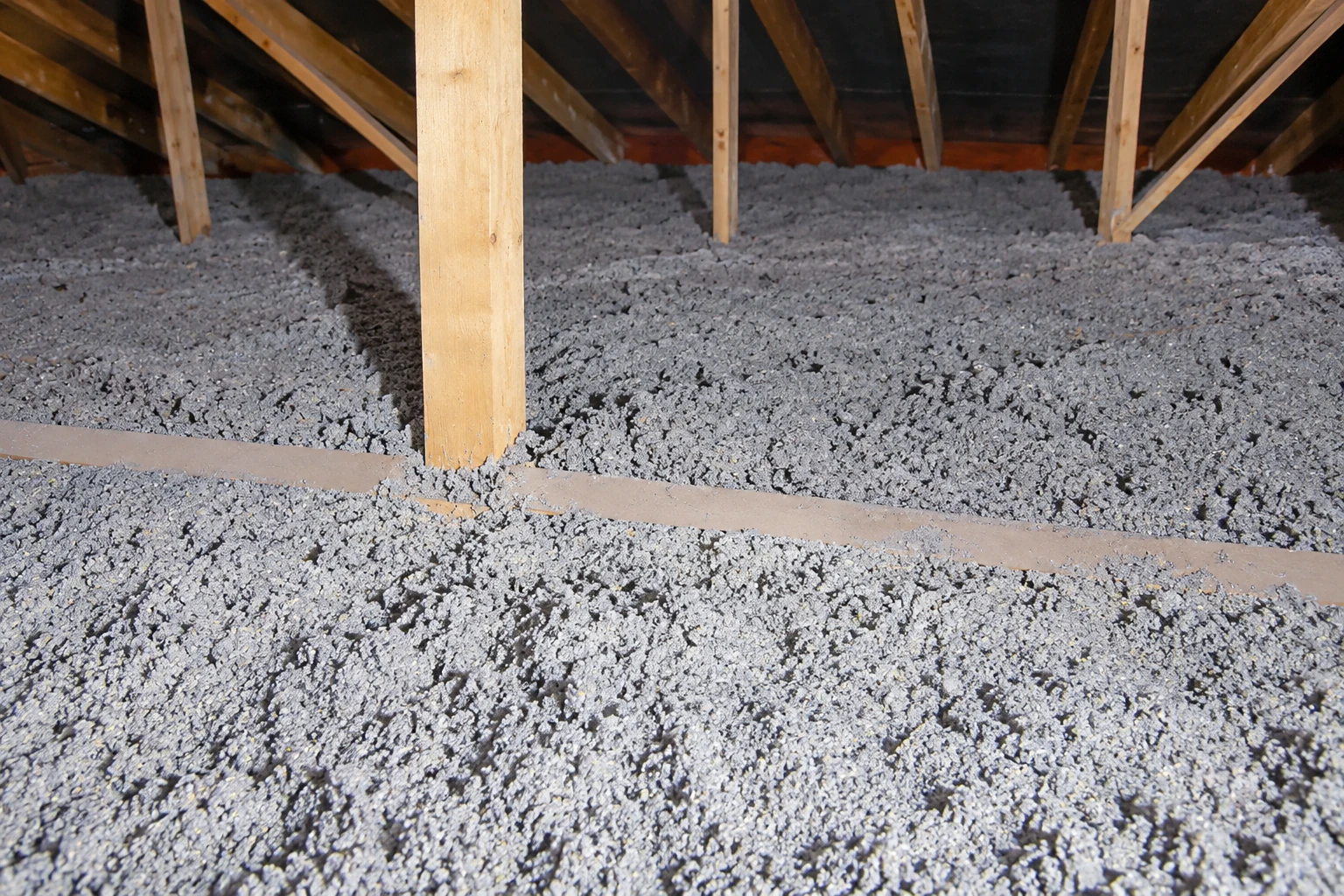
Blown cellulose
Cellulose is ground-up paper treated against fire, and it packs tightly around wires, pipes and odd framing, so it suits older attics with a lot in the way. It's heavier and settles some over time, which we allow for when we set the depth.
Blown fiberglass
Loose fiberglass is light and doesn't settle much, so it suits attics where weight on an older plaster ceiling is a worry. It doesn't soak up water the way paper can, though a leak still needs fixing before anything goes down.
Blown-in insulation in Lafayette: permits and older attics
In Lafayette, the City Engineer's Office issues building permits, and the city requires one for new construction and for alterations, repairs or changes to existing buildings. Whether adding insulation to your attic counts is a question for that office, so I don't guess at it. Outside Lafayette and West Lafayette, the Tippecanoe County Building Commission handles most of the county, which is why I look up which office covers your address before we schedule. If the job needs a permit, we handle the paperwork and tell you what the office needs from you, and since a residential review can take up to seven days once every document is in, a complete packet keeps your date from slipping.
We're based in Lafayette and work across the cities around it, and a lot of what I find up there is older houses with a few inches of old batts, open gaps around the hatch and eave vents half covered. We see the same attics on jobs in West Lafayette and Frankfort. If money's tight, Indiana's Weatherization Program may cover attic insulation and air sealing for households with incomes up to 200% of the federal poverty level or who qualify for Energy Assistance, as long as the house is safe to weatherize.
Blown-in attic work, up close
Why call us for blown-in insulation
I write your estimate myself
I come out to look at your attic and write the estimate, then our install crew does the work and I check it over with you at the end. You're talking to the same person who decided what your attic needed, so nothing gets lost between the estimate and the job.
Commercial training, own business since 2017
I spent years blowing fill and spraying foam on warehouses, offices and new buildings before I started this business in 2017. Those jobs taught me that the prep decides whether insulation works, so that's where we spend our time.
Licensed and insured before you ask
We're licensed and insured. The city can require a bond or insurance on work that needs a Lafayette permit, so it's fair to ask any crew you're comparing what they carry.
On a blown-in job, the order of the work matters more than the depth of the fill. Call or send us a message and I'll set up a time to look at your attic.
(765) 250-8263Get a written plan for your attic insulation
I'll get back to you within one business day to set a time to come out. The estimate is free, done at your house and comes with no obligation. I'll walk the attic with you and write out what I'd do and why.
Blown-in insulation questions from Lafayette homeowners
How do I tell if my attic needs more insulation?
If the insulation sits level with or below the floor joists, so you can easily see them, you should add more. If it sits well above the joists and hides them, you probably have enough, and adding more may not pay for itself. I measure how many inches are up there on the estimate, and if it's enough, I'll tell you.
Can new blown-in insulation go on top of old fiberglass batts?
Yes, new insulation can be a different type from what's already there, so loose fill can go right over fiberglass batts or blankets and the old layer can stay. That saves you the cost of pulling it out. The exception is a layer that's been damaged, which is where removal comes in.
How much does blown-in attic insulation cost in Lafayette, IN?
Installing blown-in attic insulation usually costs about $3.75 to $7.75 per square foot across the US, and that's a national estimate, not our price. Where your attic lands depends mostly on the prep I described above. You'll get your own number in writing after I've been up in your attic.
What is the best way to keep attic insulation away from chimneys and can lights?
Build blocking around them, because one insulation trade group's practice says insulation should never touch a chimney or flue. The same practice says loose fill can cover a recessed light or heater only if it carries an IC rating, the mark that says it's made to touch insulation, and other fixtures keep an air space inside the blocking. Checking the label inside your can lights is worth doing before I come out.
How long does blown-in attic insulation take, and do we have to leave the house?
You can usually stay home, because loose fill has no cure time, so there's no waiting to come back inside the way there is with foam. How long the crew is up there turns on the prep, like sealing gaps, setting baffles or pulling old material, more than on the blowing itself. I'll tell you what the day looks like when I write the estimate.
Can I rent a blower and do my own blown-in attic insulation?
You can, since some home improvement stores rent the blowing machine loose fill needs, though hiring a pro may be the wiser call. The blowing is the easy part. Do-it-yourself jobs usually go wrong on the sealing, the eave vents and the thin edges, and those are the steps that decide whether the attic works.
Talk to us about sealing and insulating your attic
Call (765) 250-8263 or send a photo of your attic joists with the form, so I know what to look for when I come out.