Closed-cell foam insulation in Lafayette IN - sealed, dry rim joists and basement walls
Cold floors and drafts where the house sits on the foundation? We seal and insulate those spots with dense foam in one pass.
Is closed-cell foam the right fix for my cold basement?
Closed-cell foam insulation is a dense, rigid spray foam that seals air leaks, insulates and keeps moisture out in a single layer. In Lafayette I use it mostly on rim joists, the band of framing that sits on top of your foundation, and on basement walls, where those three jobs matter most.
Most people who call about this have cold floors over the basement, a draft along the bottom of the walls, a power bill that climbs every winter or a basement they want to finish without it feeling damp. The price mostly turns on how many square feet we're covering, how thick the foam goes, how much old insulation has to come out first and whether the room is lived in, since a finished space needs a board or coating over the foam. The schedule turns on that prep, on any permit and on when your family can be away from the house while the foam sets. When I come out, I walk the space with you and write out what I'd do and why, so you see your own numbers before anything is booked.
How we install closed-cell foam insulation
I start by looking for anything that shouldn't get buried, like a foundation wall that weeps, soft or stained wood at the sill or old fiberglass full of mouse droppings, because foam sprayed over a problem just hides it. If water is coming in, I'll tell you to get that fixed first, even if it means calling another trade. Once the space is sound, our crew pulls the old batts out of the rim joist bays, the pockets between the floor joists, covers what needs protecting and sprays the foam straight onto the rim joists and the inside of the foundation walls so the seal and the insulation go on together. Where the room is lived in or about to be finished, we plan the board or coating that goes over the foam before we spray, and when the crew is done I check the work over with you.
Closed-cell isn't my answer for every space. Foam costs more than loose fill, and in most attics, sealing the gaps and topping up with loose fill blown through a hose gets you more for your money, unless your ductwork runs up there. For attic rooflines and inside walls that stay dry, open-cell foam insulation is softer and usually costs less, though it takes a much thicker layer to stop air. Building owners call us for closed-cell on walls and roofs too, and our commercial insulation work is where I learned to spray it.
Rim joists only
This suits an older house with cold floors or a draft along the bottom of the walls while the basement stays unfinished. It's the smallest closed-cell job and often the best use of the money, because the rim joist is where a lot of outside air finds its way in.
Rim joists and foundation walls
This suits a basement you use or plan to finish, since foam on the walls keeps the room warmer and won't soak up dampness. It's a bigger job, and in a lived-in room it includes the board or coating that covers the foam.
Closed-cell foam in Lafayette: permits and older basements
Inside Lafayette city limits, the City Engineer's Office issues building permits and requires one for any alterations, repairs or changes to an existing building, and adding foam to a basement can fall under that, so I don't assume either way. The city only issues permits inside its limits, with few exceptions, and outside them another office may cover your house. You can check whether your property is inside Lafayette city limits yourself, and I look it up for your address before we schedule. If the job needs a permit, we handle the paperwork and tell you what the office needs from you.
In older houses here, the rim joist bays usually have fiberglass stuffed in them, often dusty and sometimes with a mouse nest, and the block or poured walls below can show old damp spots. We pull that out and look at the wood before any foam goes on, and we find the same thing on jobs in West Lafayette and Frankfort.
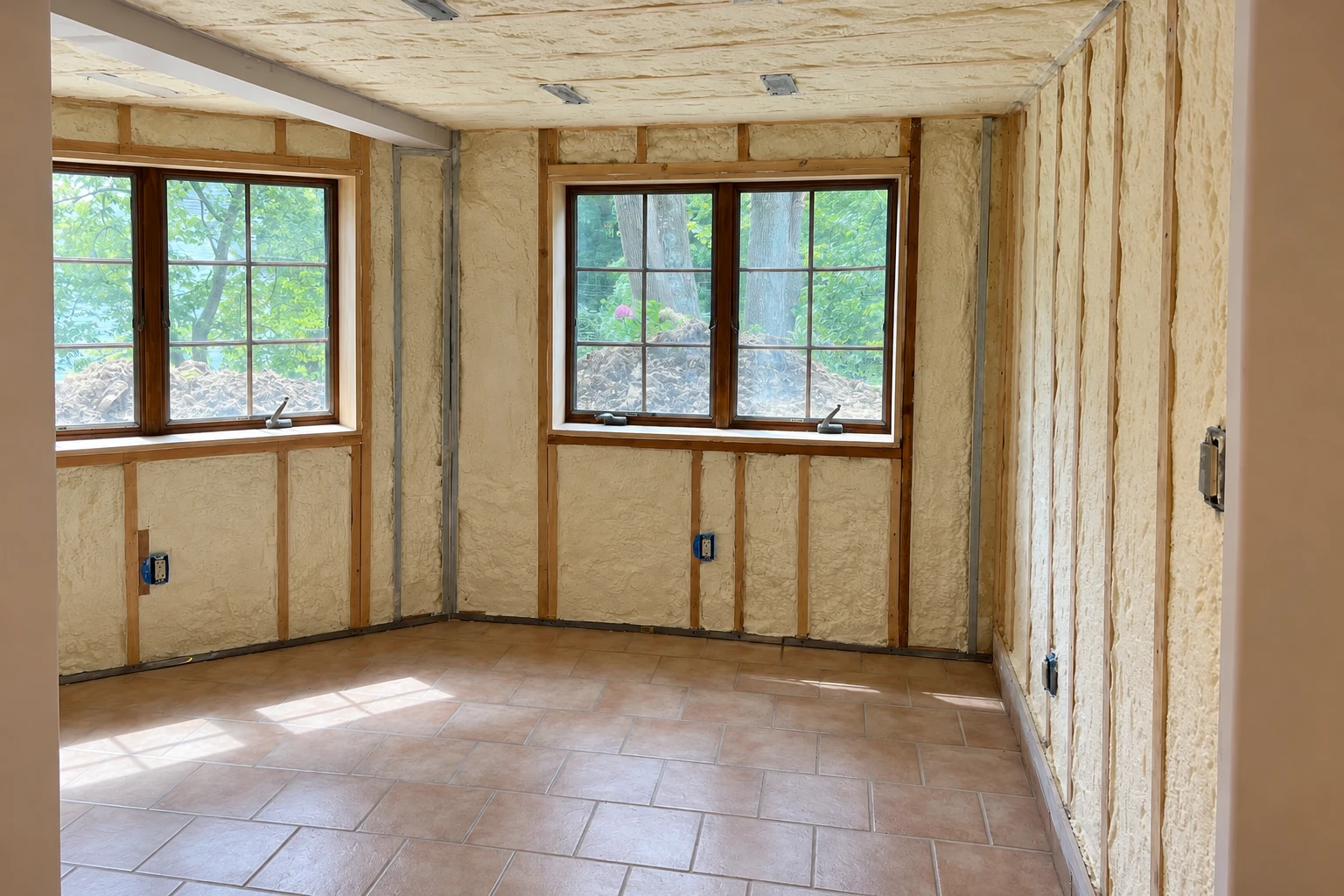
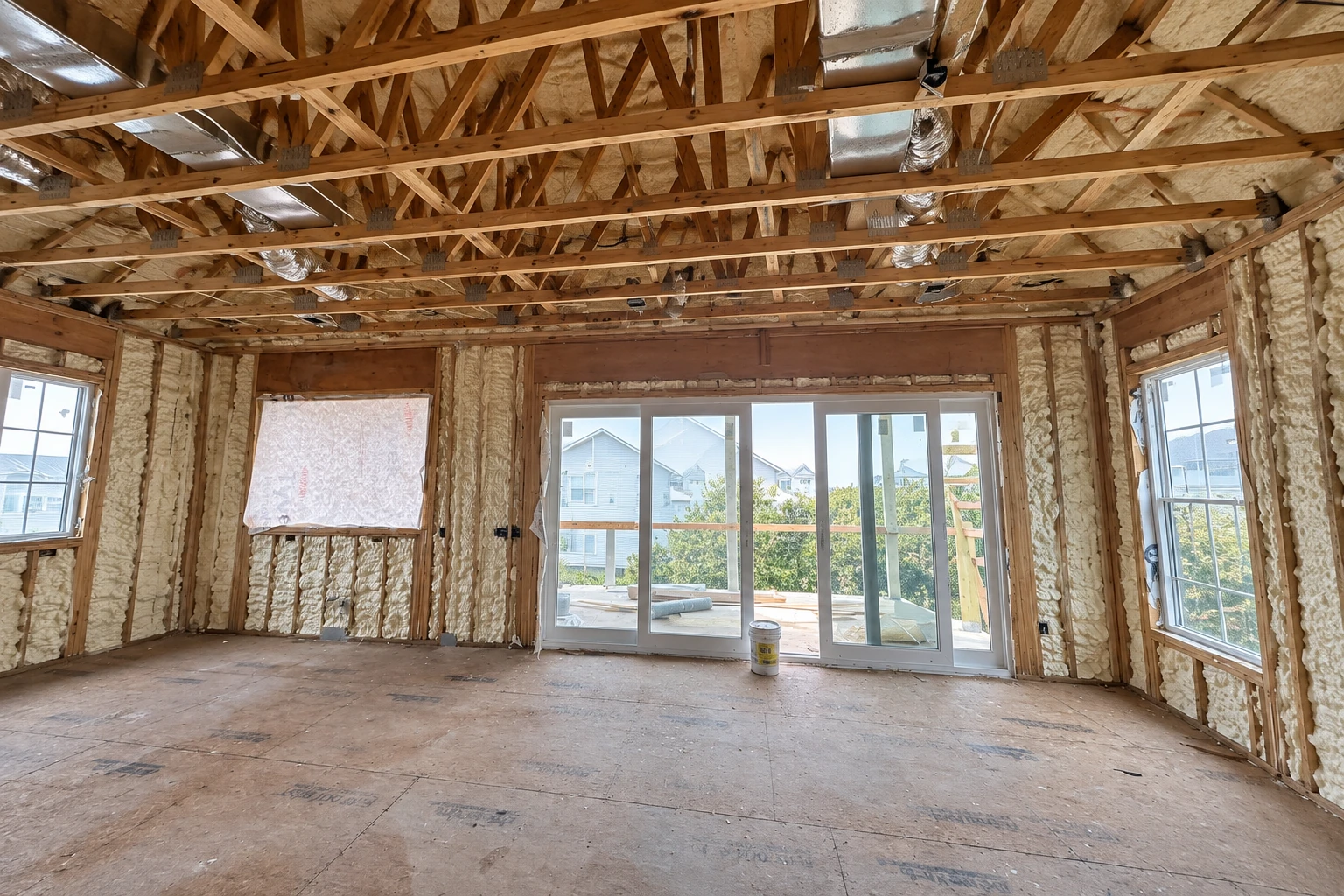
What closed-cell foam looks like
Why call us for closed-cell foam
The estimate comes from me
I come out, look at the job and write the estimate myself, and after our install crew finishes I check it over with you. You deal with the same person from the first look to the last walk-through.
Problems get fixed before foam
I'd rather tell you to fix a foundation leak or call another trade than spray over it. Closed-cell is hard to take back out, so whatever is behind it has to be right first.
Trained on commercial foam jobs
I sprayed foam on warehouses, offices and new buildings for years before I started this business in 2017. That's a lot of rim joists and block walls, and it's why we spend the time on prep.
A small Lafayette crew
We're based in Lafayette, and I still answer the phone myself, so you're talking to the person who will come look at your basement. We're licensed and insured, and the work is backed by our satisfaction guarantee.
With closed-cell foam, what matters most is what's behind it, because once it's sprayed you won't see that wood again. Call (765) 250-8263 or send us a message and I'll set a time to come look.
(765) 250-8263Get a written plan for your rim joists and basement walls
Tell us which areas you want insulated and your address, so I can check which office covers your house. We reply within one business day to set a time, then I come out, walk the space with you and write out what I'd do and why. The estimate is free and done at your property, with no obligation.
Closed-cell foam questions from Lafayette homeowners
How much does closed-cell spray foam insulation cost in Lafayette?
In Lafayette, closed-cell spray foam covering 1,000 square feet at 3 inches thick usually costs about $2,800 to $4,200 for the job. A rim-joist-only job covers far less area, while a full basement with a board over the foam covers more. Your price moves with the square footage, the thickness and how much old insulation comes out first, and I write it out for you when I come look.
How long do we have to stay out of the house after spray foam?
Plan on at least 24 hours away, because safety guidance says to leave during the spraying and for at least that long after. Emissions vary with the foam and the house, so we tell you which product we're using and go over the safety plan before we start. If anyone has asthma, respiratory allergies or a skin condition, read the product information carefully, and we can talk about other insulation if needed.
Does spray foam insulation need a city permit in Lafayette?
It may, since the city's permit rule covers changes to existing buildings, and I check that for your address before we schedule. If a permit is needed, city reviews for residential projects can take up to seven days, counted from when all the documents are in. That's why we sort out the permit question early, so the review fits into your timing.
Why is spray foam better than fiberglass batts on a rim joist?
Batts let warm indoor air pass through to the rim joist, which is cold in winter, and that can leave condensation and mold on the wood. Spray foam seals the air and insulates in one step, so that moist air never reaches the cold surface. Closed-cell counts as an air barrier at 1.5 inches thick, while open-cell needs 5.5, which matters in a shallow bay.
What is the best way to insulate basement walls in an older house?
Foam sprayed straight onto the inside of the foundation walls tends to work best, because research found that insulation which tolerates water, placed right against the wall, is the most consistently effective setup. One spray foam guide rates closed-cell as its preferred choice for basements, since it won't absorb water. Any leak has to be fixed first, though, because no insulation fixes a wet wall.
Does closed-cell foam have to be covered with drywall in a finished basement?
In a lived-in room or at a thicker layer, it usually does. One guide says foam more than 3.25 inches thick, or in a space you live in, needs a thermal barrier, a covering such as drywall. Rules vary from place to place, so check with your local code officials, and we plan the covering before we spray.
Plan closed-cell foam for your basement and rim joists
Call (765) 250-8263 before you frame or finish the basement, so the foam goes on bare walls and nothing has to come back out.